Catch Compliance Risks Early.

Most Operators Find Out About Damp, Mould, and Legionella Too Late.
Damp and mould are the single biggest resident complaint and legal liability in residential property. The conditions that cause them – excess humidity, poor ventilation, low temperatures – can be present for months before visible growth appears. By the time a resident reports it, the damage is done: mould is growing, residents have been exposed, and the Awaab’s Law clock has started.
Legionella poses a different but equally serious risk. Manual flushing regimes are expensive, inconsistently performed, and create ongoing liability. Most operators have limited real-time visibility of whether water systems are within safe temperature ranges at any given moment.
A reactive approach to either puts operators permanently behind the problem.

Continuous Monitoring. Early Warnings. An Evidence Trail That Holds Up.
Two modules work together to give operators continuous visibility of health and compliance risk across every room – automatically, without manual inspection.
Mould Risk Intelligence
- Continuous room-level monitoring of the conditions that cause damp and mould, with condensation risk scored for every space and early warnings issued before visible growth appears. Every reading and action is timestamped into an auditable record.
- Read the Awaab’s Law guide for the legislation, the timelines and how the risk model works.
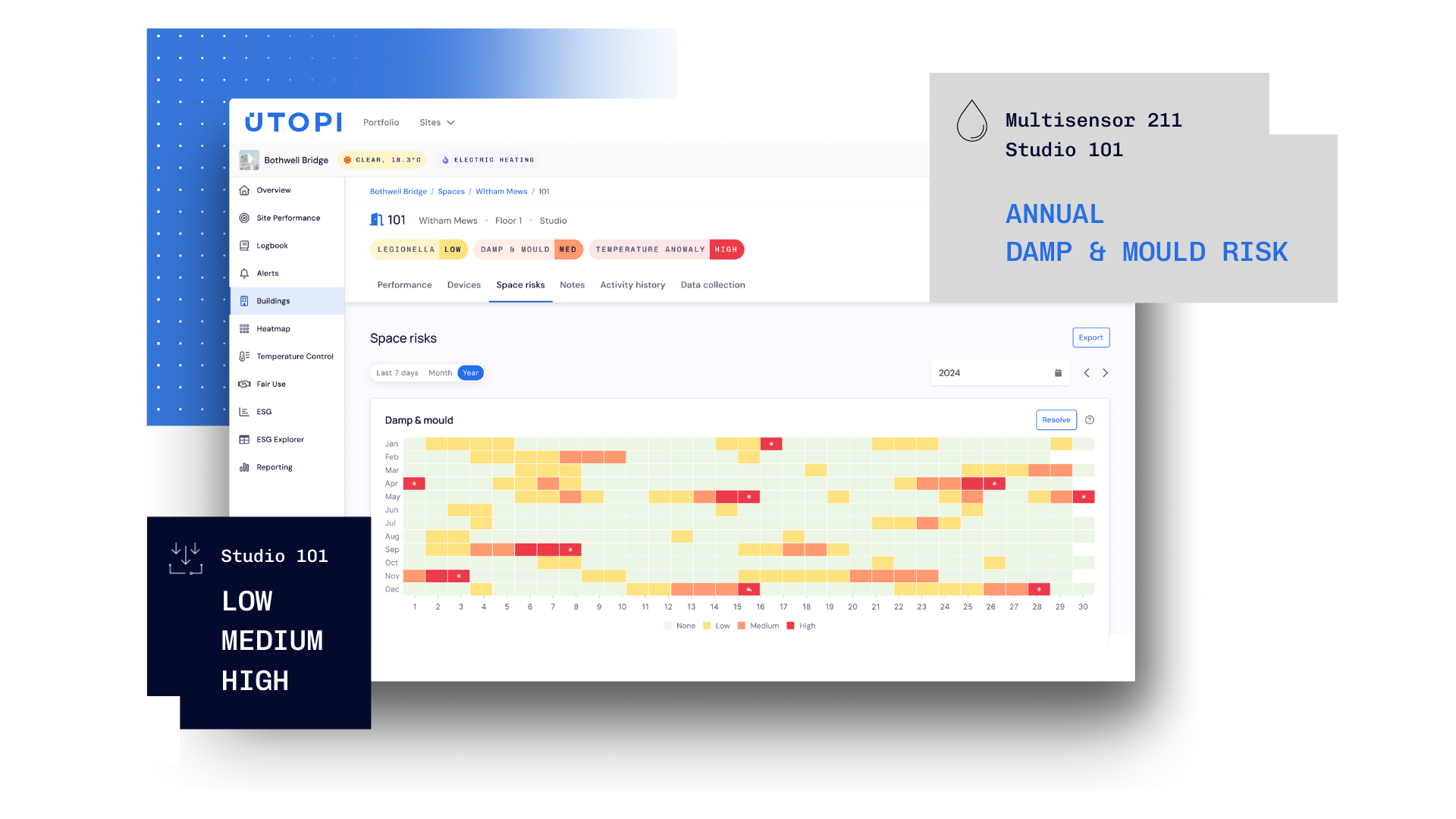
Legionella Risk Management
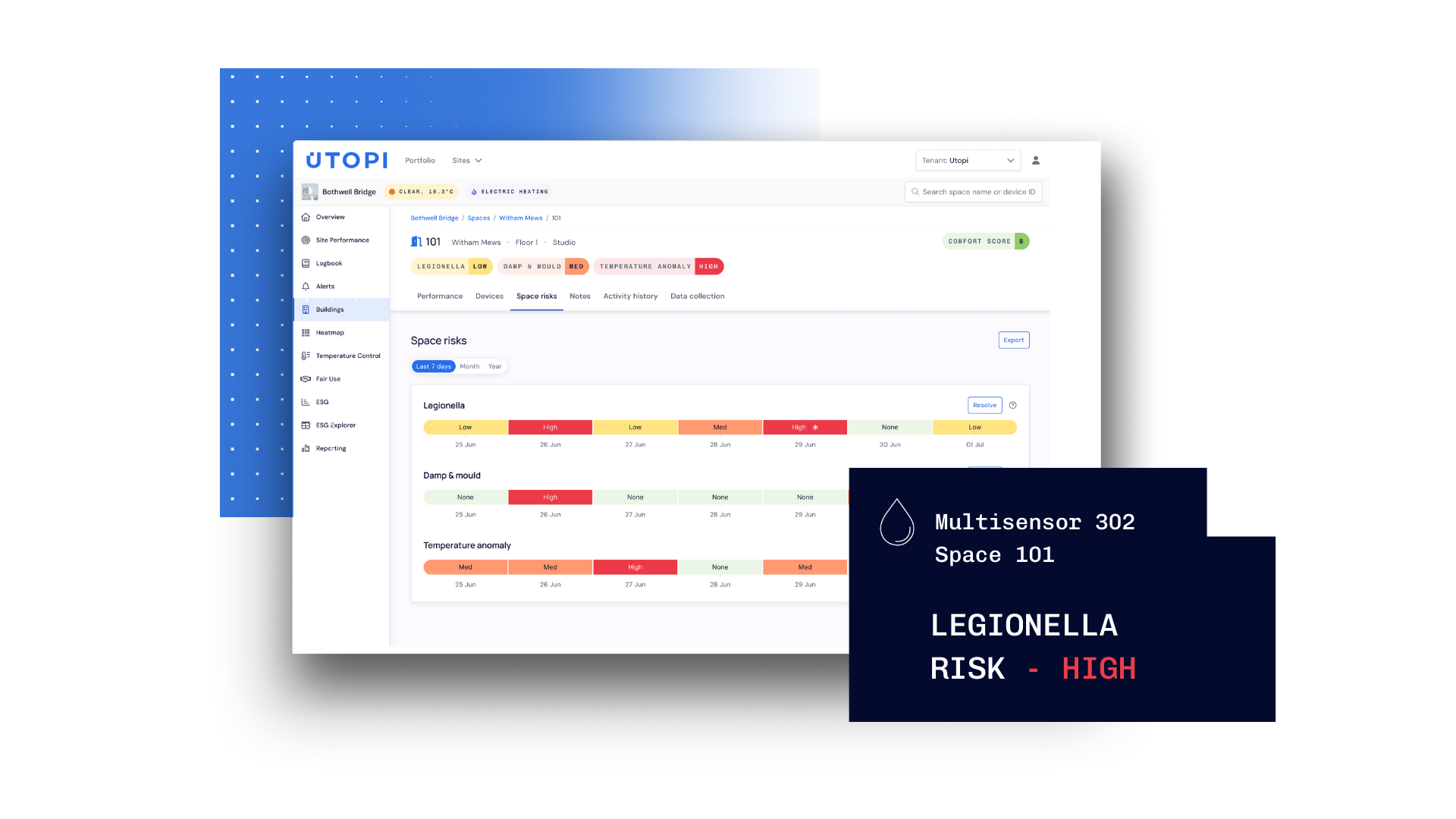
- Continuous monitoring of environmental conditions to identify where Legionella bacteria could develop in water systems.
- Compliant with HSE ACOP L8 and HSG274.
- Up to 90% reduction in manual flushing requirements.
- Every monitoring record timestamped and auditable.
Why Continuous Monitoring Matters
Awaab's Law obligations begin from the moment a resident reports a problem. The strongest compliance position is one where the monitoring found the problem first - before the resident ever had to raise it.
Early Detection That Changes The Cost Equation.
PBSA asset: £40,880 potential remediation exposure identified – and avoided
A PBSA operator needed to understand where damp and mould risk was developing across their asset before it became a costly problem. With increasing regulatory scrutiny, waiting for resident complaints was no longer viable. Utopi’s Mould Risk Intelligence analysed continuous environmental data across 112 rooms over 12 months – identifying the conditions for mould growth before any visible symptoms appeared. 73% of rooms were flagged as high risk, with a potential remediation exposure of £40,880 if left undetected. Early intervention meant targeted, low-cost fixes instead of costly remediation, decant, and potential Awaab’s Law liability.