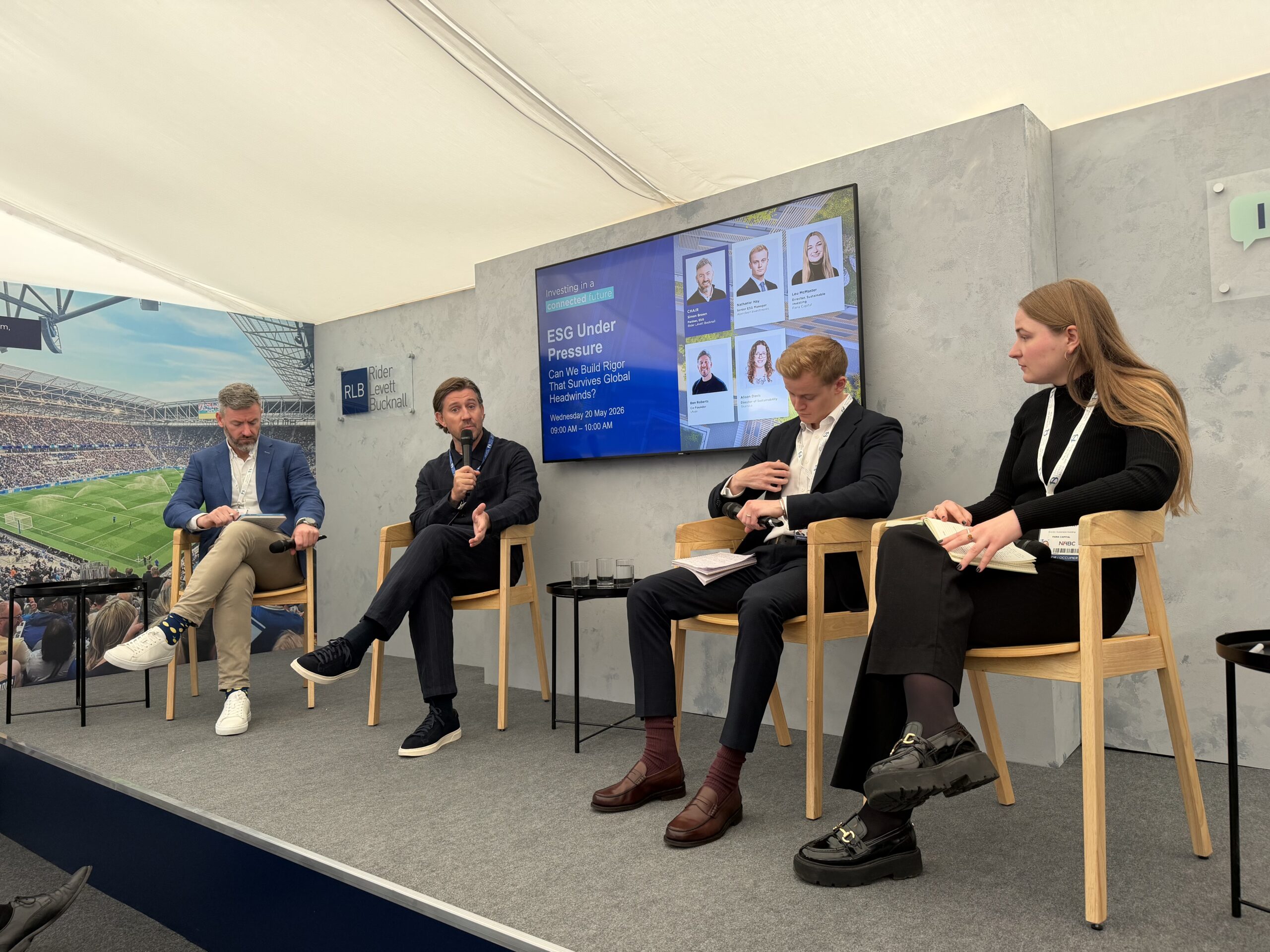
“ESG is still financially material.”Nathaniel Hay - Senior ESG Manager, Aberdeen Investments
Our UKREiiF 2026 round-up, and where the living sector goes next.
Real estate is in a transitional period. Political uncertainty is shaping investment decisions on both sides of the Atlantic, build cost inflation has not relented, and the UK is still grappling with one of the most stubborn affordability problems in a generation. There is a lot in the air.
And yet, walking out of UKREiiF, one thing felt settled. PBSA is no longer arguing for its place. It has matured into a genuine institutional asset class, with the data, the operational discipline and the resident outcomes to prove it. The question now is not whether the sector belongs at the table, but what it does with the seat it has earned.
Three days, three speaking sessions, and dozens of conversations later, a few themes stood out. Here is a top-level read on what we heard:
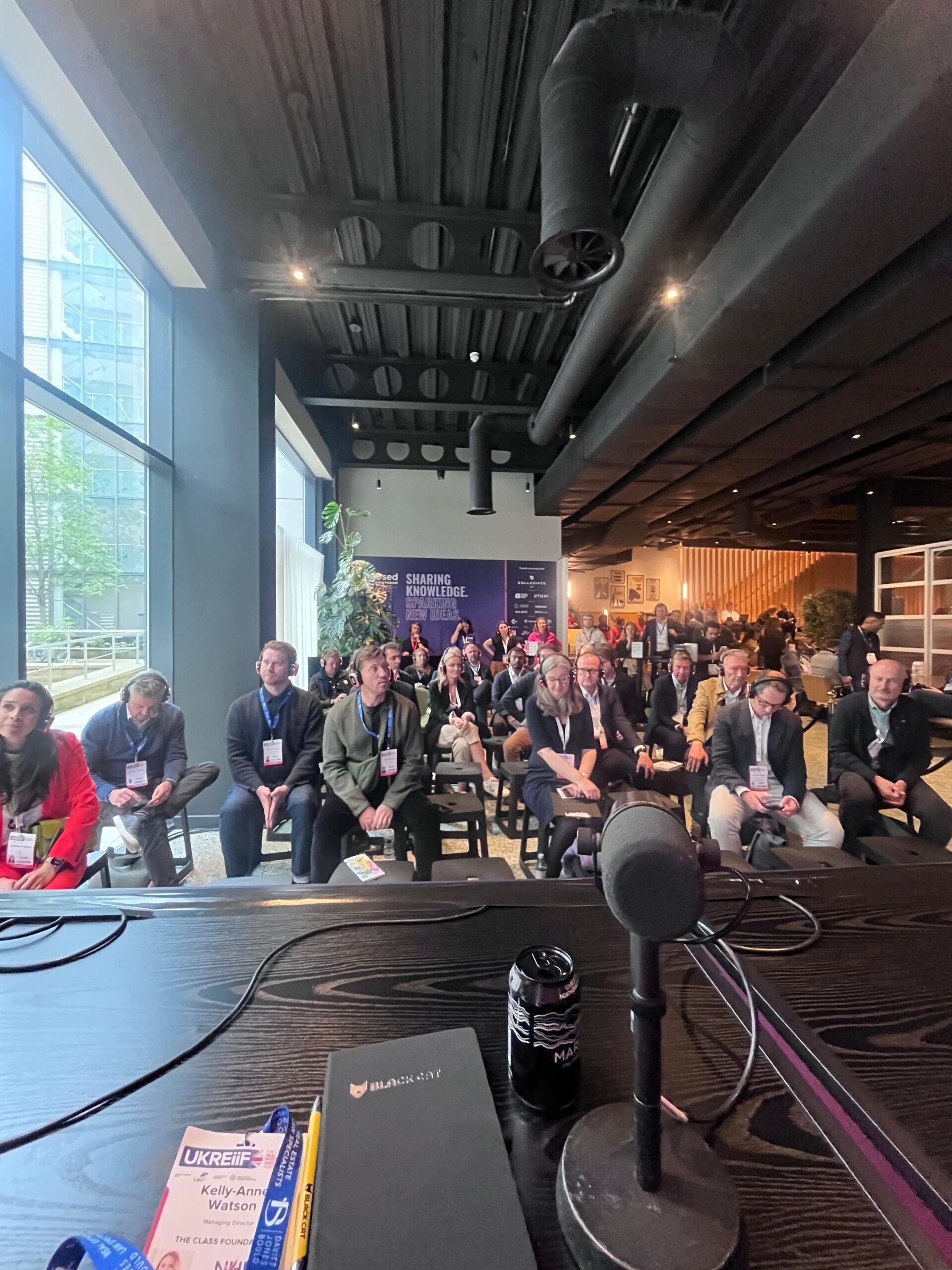
Panel #1: Beyond the Labels.

Residents don’t live in use classes.
For the first time this year, the Housed Shared Living Summit gave PBSA a dedicated voice on its main programme, alongside Build-to-Rent, Co-living and Later Living. It is a small detail with a larger meaning. The conversation about residential is, finally, becoming one conversation.
The opening panel pushed at the labels themselves. Are they still useful, or have they become a constraint? Renters, after all, don’t think in asset classes. They think in rent, location, quality and flexibility.
A few threads carried through. The silos are an industry construct, not a resident one. Planning frameworks are slowing things down, holding back schemes that residents, investors and local authorities are aligned on. And the evidence base for blended models is stronger than the conversation often suggests. Research shared by The Class Foundation pointed to intergenerational living reducing feelings of loneliness and depression by up to 40%, with measurable improvements in cognitive health and life satisfaction. Newcastle’s Intergenerational Living Lab is producing similar findings. Denmark and Sweden have been quietly proving the point for years.
The harder question, and the one worth sitting with, is on the capital side. PBSA, BTR and Co-living are still underwritten as separate asset classes. The European capital that could back mixed-use, multi-generational schemes is there. The underwriting models have not yet caught up.
Panel #2: Political Influence… but for the Long Term?

Sustainability, DEI and social impact in a noisier world.
A second Housed panel asked whether sustainability, DEI and social impact still mattered in a political climate that has visibly pulled back from all three. What stood out was how grounded the European side of the market has stayed. Standards are still tightening. Reporting expectations are still rising. The direction of travel is unchanged.
Three observations landed clearly. Regulation outlasts politics, and real estate cycles run longer than political ones. DEI, treated as more than a slogan, holds real long-term value; properly applied, it eases healthcare and insurance costs, reduces turnover and underpins genuine placemaking. And the long view matters. Six generations forward, the building you put in the ground today is the legacy. The data captured today is the proof that the work was done properly.
Panel #3: ESG needs a Re-Brand.
From bolt-on to baseline.
If there was a headline from the Rider Levett Bucknall ESG panel, it was this: ESG is not under pressure, it is maturing. It is no longer a separate workstream, a marketing exercise, or a bolt-on to a transaction. It sits inside every leasing conversation, every diligence process, every exit strategy.
The commercial fundamentals have not changed. Minimise cost. Maximise income. What has shifted is the recognition that ESG is one of the most effective levers for achieving both.
Data availability is the starting line. Main meter data, energy data, room-level performance data; get these right and the rest follows. ESG is sitting inside the risk conversation now, particularly at the point of transaction, where sustainability performance shows up directly as leverage in price negotiations. Tightening regulation, including MEES, is pulling the industry onto shared metrics and shared expectations. And the acronym itself may be due a rethink, even as the substance behind it has never mattered more.
BETWEEN THE SESSIONS.
Topics that kept coming up in the corridors.
The sessions on programme set the tone, but some of the most useful conversations at UKREiiF happen between them. A handful of topics kept resurfacing across the three days:
- Affordability and product mix. Cluster options, tiered ranges and value management (as distinct from value engineering) are all gaining traction, alongside calls for grant funding to extend beyond affordable housing into the broader living spectrum.
- Marketing has to be personal in a time of immense competition. This resident generation grew up with AI and can spot an automated nurture sequence at fifty paces. Trust is being built through organic, lifestyle-led communication.
- Does ESG need a re-brand. It’s locked into investment frameworks and underwritten rental growth, but yet why does it continue to feel like a burden.
- The greater neighbourhood matters. Design choices ripple outwards. Geopolitical noise will come and go; the building you put in the ground is the legacy.
- Community in every form. Growing appetite for single-site ecosystems where a resident can move from undergraduate to postgraduate accommodation without leaving the operator.
- Data as a transactional input. Across multiple sessions, building performance data was raised as a factor in price defence, risk mitigation and exit readiness.
ON LEAVING LEEDS.
A sector finding its shared language.
Three days of conversation, and the through-line was hard to miss. The living sector is starting to talk to itself differently. The labels are softening. Data has moved out of the specialist lane and into every part of the transaction. Sustainability has stopped being an add-on. And PBSA, finally, has a seat at the same table as the rest of the residential market.
For a sector that has spent years arguing for its place in the institutional capital conversation, that shift matters. It also raises the bar. A mature asset class is judged on what it does next, not what it has done to get here.
One thing is for sure – we were glad to be in the room for it.
If you were at UKREiiF and want to pick up any of these threads, or if you couldn’t make it and want a longer read on what we’re hearing across the European market, you can find us at utopi.co.uk.