Scenario.
If one leaking toilet cistern had run for a full year, it would have wasted around 51,100 litres of water, enough to supply one person’s drinking water for 70 years, or to fill 28 fire engines.
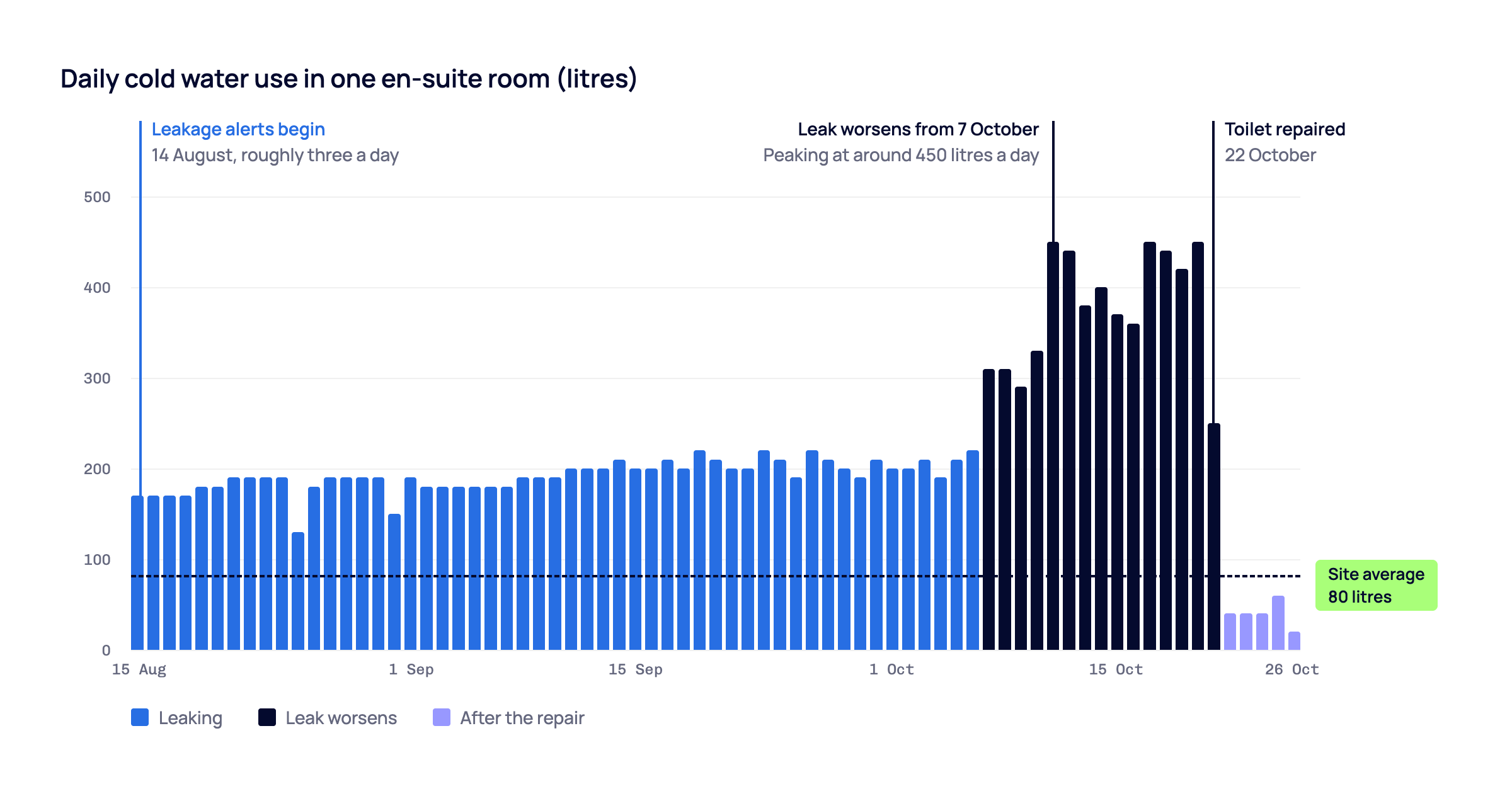
When a cistern leaks continuously into the bowl, there’s very little for anyone on site to notice: The water drains away quietly, nothing pools on the floor and the room looks normal during an inspection. That was the case in one en-suite room in a PBSA building monitored by The Utopi Platform™. Leakage alerts began mid-August and continued at roughly three a day for the next ten weeks.
Site teams checked the room three times and a plumber was called out, but each visit only showed the room at that moment. The room-level water data showed something else: Cold-water use in that single room averaged 230 litres a day, nearly three times the site average. From early October it rose further, peaking at around 450 litres a day.
Resolution.
The leakage alerts set up for the building on The Utopi Platform™ kept flagging the room until the fault was fixed, so the case stayed open. Site maintenance went back and traced the source to the toilet. Once the leak was repaired on 22 October, daily cold-water use fell to around 40 litres, well below the site average. By then, the room had used around 10,350 litres more than the site average over 69 days.
Water leaks are the kind of fault that can stay invisible between scheduled visits: Room-level data gives your teams a continuous view, and the confidence to keep investigating when the first check comes back clear.
The Data.
197 leakage alerts from one room over 69 days
230 litres of cold-water use a day on average, nearly 3x the site average
Around 10,350 litres above the site average before the fix on 22 October, enough to fill around 130 baths