Measure Energy Waste. Fix it.
Prove it.
Energy is Being Wasted in Every Building. Most Operators Can't See Where.
Whole building consumption data cannot tell you which rooms are heating empty spaces, which buildings are gradually losing efficiency, or where retrofit investment will deliver the greatest return. Manual audits are too infrequent to catch gradual drift – and by the time the problem appears in a quarterly report, it has been running for months.
Net Zero targets and ESG reporting obligations are now requiring operators to evidence improvement, not just report consumption. Institutional investors and green finance lenders want room-level, timestamped data – not estimates. Without continuous room-level monitoring, that evidence cannot be produced.

Three Modules That Find Waste, Track Improvement, and Produce Auditable Evidence.
Three modules work together to identify energy waste, track improvement over time, and produce the room-level, timestamped data that investors and regulators require.
Energy Drift Intelligence (EDI)™
Tracks whether each building is improving, stable, or deteriorating in energy performance over time.
A drift score with persistence indicator detects gradual efficiency losses before costs escalate.
Before/after performance tracking validates every operational intervention.
Unoccupied Heating Detection
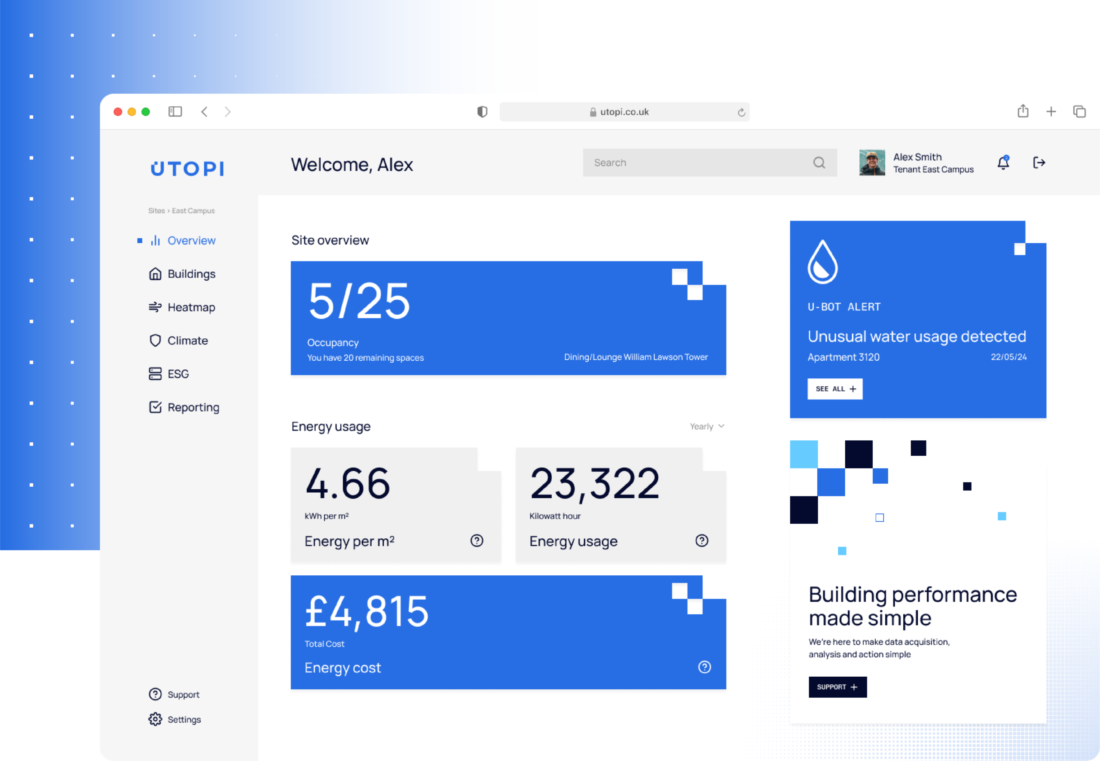
PIR occupancy sensors detect spaces being heated when no one is present.
Weather-normalised baselines isolate avoidable consumption from unavoidable demand.
Every wasted kWh, cost, and CO₂ equivalent is quantified automatically and structured for ESG reporting.
Thermal Loss Analytics
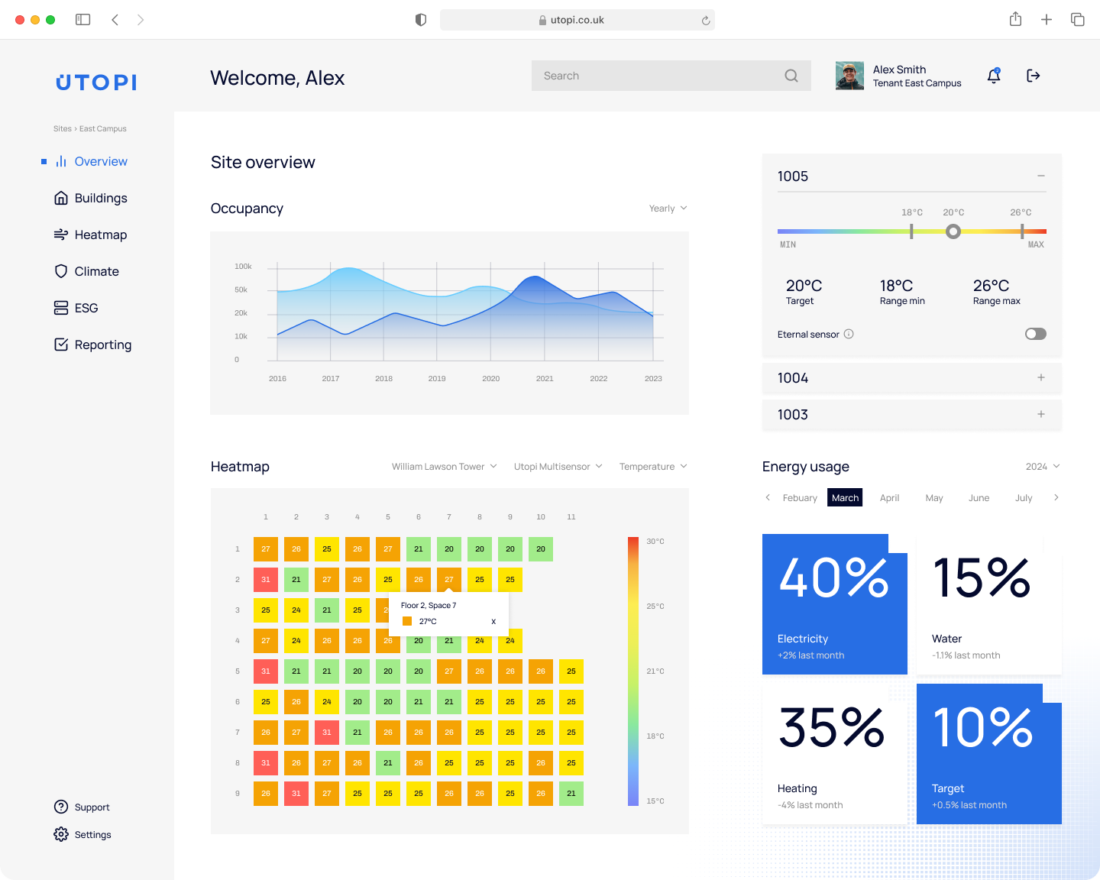
Measures cooling rates during unoccupied periods to identify which rooms have the highest avoidable energy loss.
Prioritises retrofit spend for maximum return on fabric improvement programmes.
The impact of every intervention is validated before and after.
Hard-Coded Savings. Every Client. Every Building.
The Curve, PBSA (YUGO): £38,016 saved in one heating season
Utopi was brought in to help a new-build PBSA asset reduce energy consumption, enhance operational efficiency, and reduce NOI costs. The Utopi Platform™ was installed at the start of a heating season, and within two weeks hourly environmental performance data was being generated. When it became clear residents were not responding to site team requests to reduce temperatures, Smart TRVs were installed to give the operator direct energy control. The result: a 4°C average temperature reduction across the asset and £38,016 in savings over a single heating season.

~20%
15–25%
9x
Spot Energy Waste in Your Portfolio.