
“With granular, room-level insights you can uncover so much about resident behaviours. In this instance, we were able to do really meaningful analysis and thankfully aid Police Scotland in finding the missing student. Utopi data goes well beyond just energy insights.”Stuart Paterson - Head of Customer Impact at Utopi
When a student resident in Scotland was reported missing, accommodation staff faced an urgent welfare concern. With limited information available and time critical, data from the in-room Utopi Multisensor helped provide key behavioural insights that supported authorities in tracing the student safely.
This case study highlights how real-time, granular room-level insights can strengthen duty-of-care strategies while supporting resident wellbeing and operational response.
The Challenge
A Purpose-Built Student Accommodation (PBSA) operator in Scotland contacted Police Scotland after becoming concerned about a student who had not been seen for several days.
The operator had exhausted traditional welfare check methods, including:
- Attempts to contact the resident directly
- On-site staff welfare checks
- Communication through known contacts
With concern escalating, the operator needed additional insight to understand whether the student’s absence indicated a potential welfare or safety issue.
Fortunately, Utopi technology was installed in the resident’s room, offering an opportunity to analyse behavioural and environmental data patterns to see what the trends showed.
The Solution
Following a request from Police Scotland, Utopi conducted a room-level data review to reconstruct recent activity patterns within the accommodation. By analysing Multisensor data across temperature, light, noise, humidity, air quality and motion, Utopi’s customer impact team were able to provide a clear picture for authorities and help ease the concern of the student’s safety.
Multisensor data revealed a clear change in activity behaviour:
- Normal and consistent occupancy patterns prior to the date the student was last seen
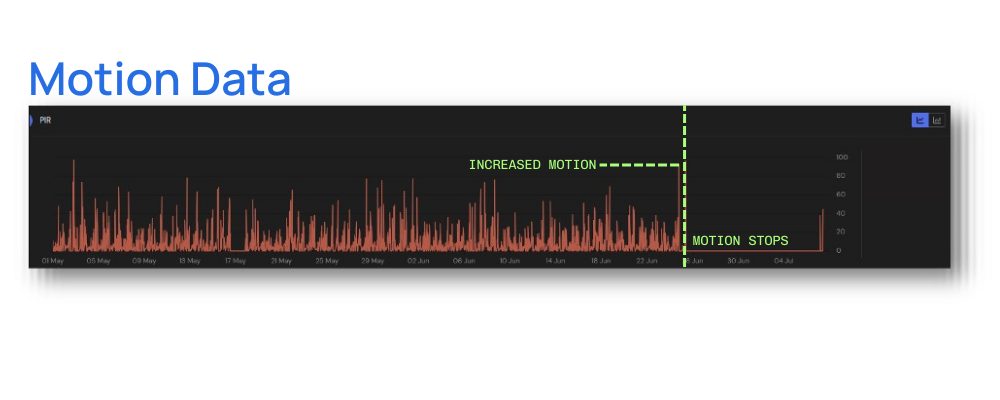
- A significant spike in movement activity on the day before the student was last seen
- A sudden stop of motion data shortly afterwards
This behavioural pattern suggested preparation activity consistent with packing and leaving, rather than an emergency or incident occurring within the room.
Multisensor data also revealed:
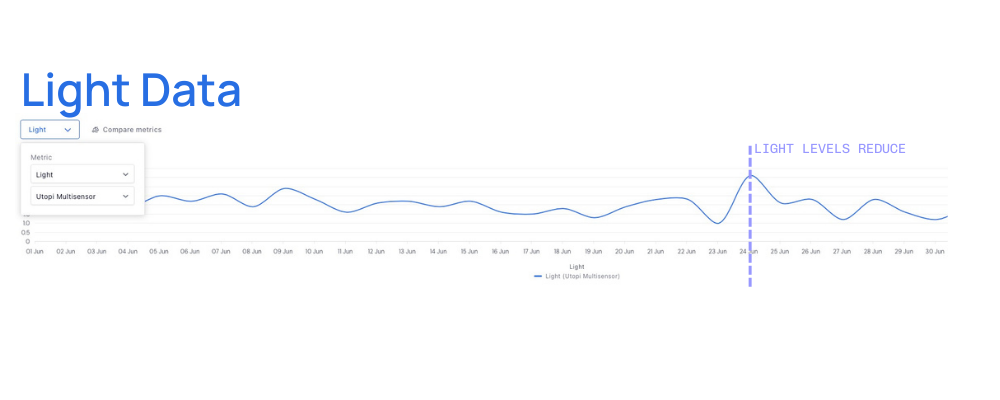
- Room light levels dropped shortly before motion activity stopped
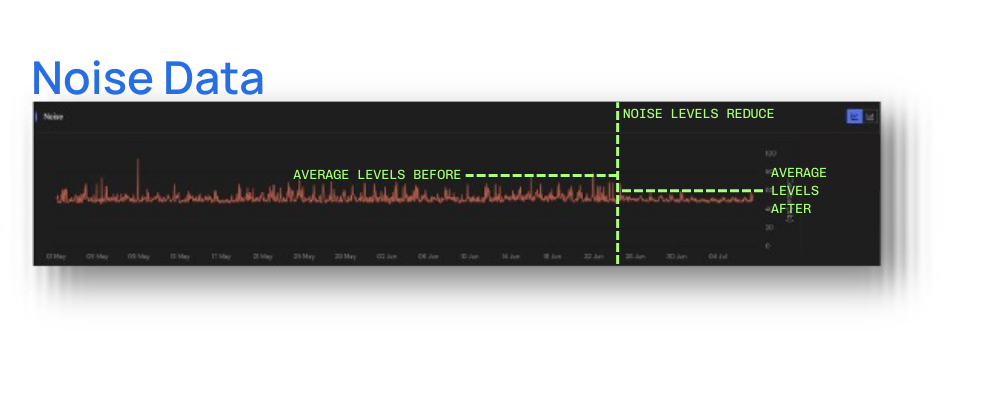
- Noise levels reduced from the average occupied levels
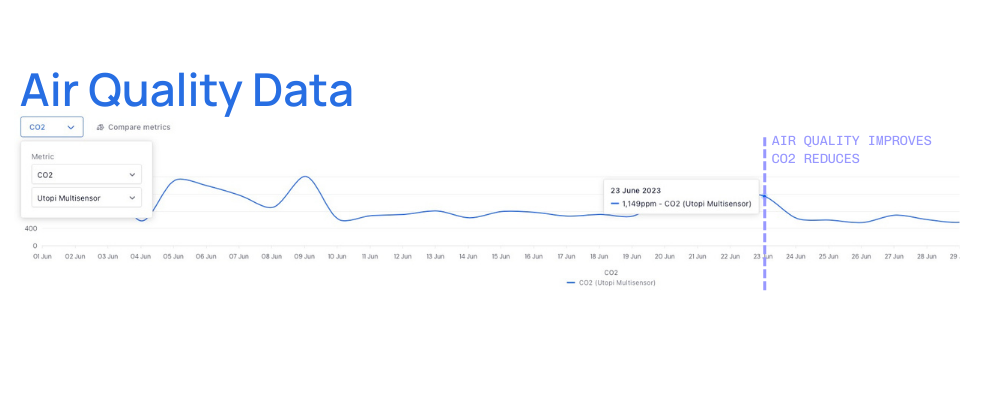
- Air quality reduced significantly, indicating less CO2 in the space and therefore no occupancy
These combined signals suggested deliberate shutdown of the living space rather than abandonment caused by an unexpected or suspicious event. In other words, pulling the blinds down and turning the heating off, a sign of diligence and not suspicious circumstances.
The Outcome
By combining movement and environmental sensor insights, Utopi was able to help establish a reliable timestamp indicating when the resident most likely left the accommodation voluntarily.
Police Scotland used this timeframe to narrow external investigations, including targeted CCTV analysis. Footage subsequently showed the resident leaving the property with a suitcase and entering a taxi. Further investigation revealed the taxi transported the student to Glasgow Airport. Using this information, the accommodation operator was able to re-establish contact with the resident. The student had returned home due to severe homesickness and was confirmed safe.
The Broader Impact
This case study demonstrates how high-resolution, multi-layered building intelligence can support welfare safeguarding in student accommodation environments.
Beyond emergency response, Utopi Multisensor insights enable operators to:
- Detect prolonged isolation patterns
- Identify sudden behavioural changes that may indicate wellbeing concerns
- Strengthen duty-of-care frameworks
- Provide proactive resident support
- Improve operational decision-making through objective data
As loneliness and wellbeing challenges continue to increase across student populations, data-driven insight, especially at room level, is becoming a critical component of resident experience strategies.
Why It Matters
Duty of care in student accommodation is evolving. Operators are expected not only to provide safe living environments but also to support resident wellbeing proactively and responsibly.
By transforming environmental and behavioural signals into actionable insight, Utopi helps accommodation providers move from reactive welfare management toward preventative, data-supported resident care.
Learn more about Utopi insights and data solutions, here.